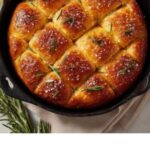
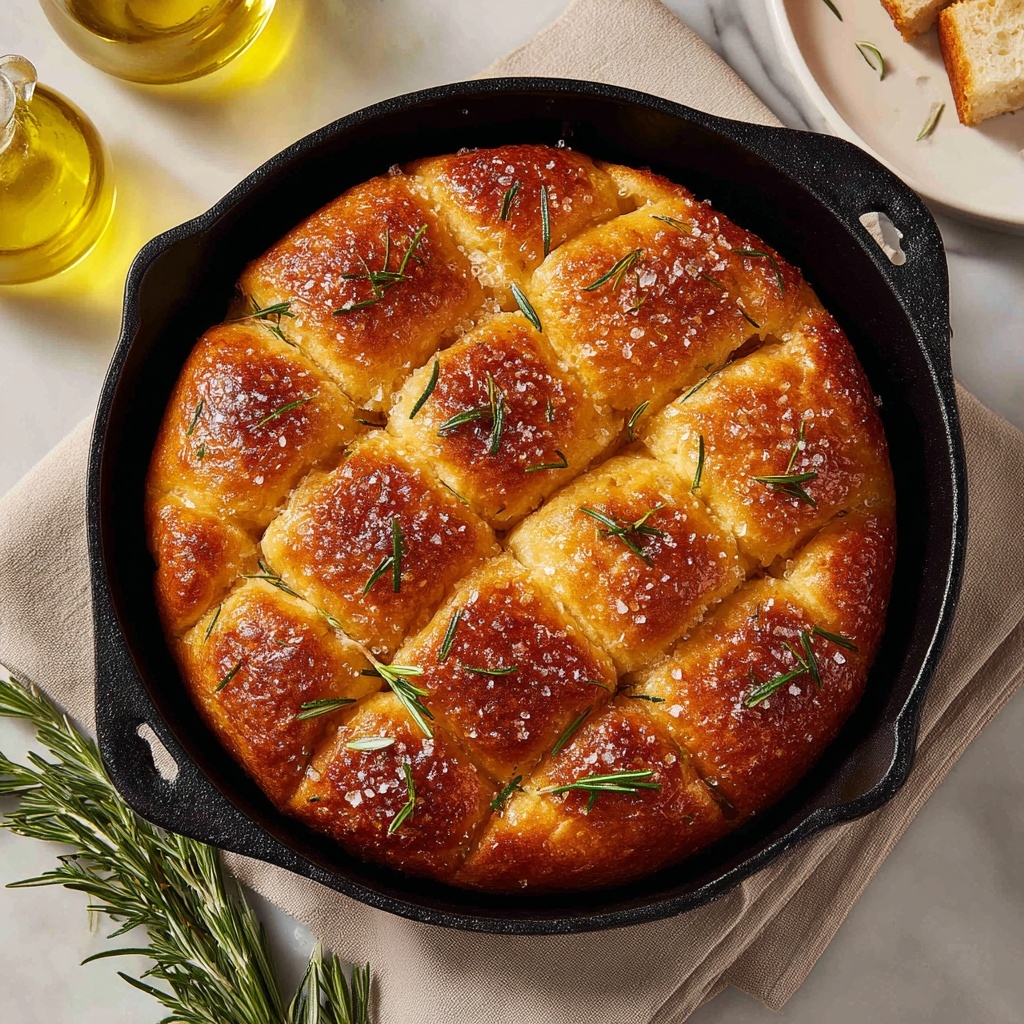
If you have ever dreamed of biting into a warm, fragrant loaf fresh from the oven, then you are going to love this Rustic Garlic Rosemary Skillet Bread Recipe. This bread brings together simple, wholesome ingredients in a way that fills your kitchen with irresistible aromas and your table with a truly comforting staple. It’s rustic in charm and bursting with savory garlic and aromatic rosemary, all baked to golden perfection in a cast iron skillet. Whether you’re a seasoned baker or just starting out, this recipe invites you to create a loaf that’s crunchy on the outside, tender on the inside, and absolutely perfect for any meal or snack.
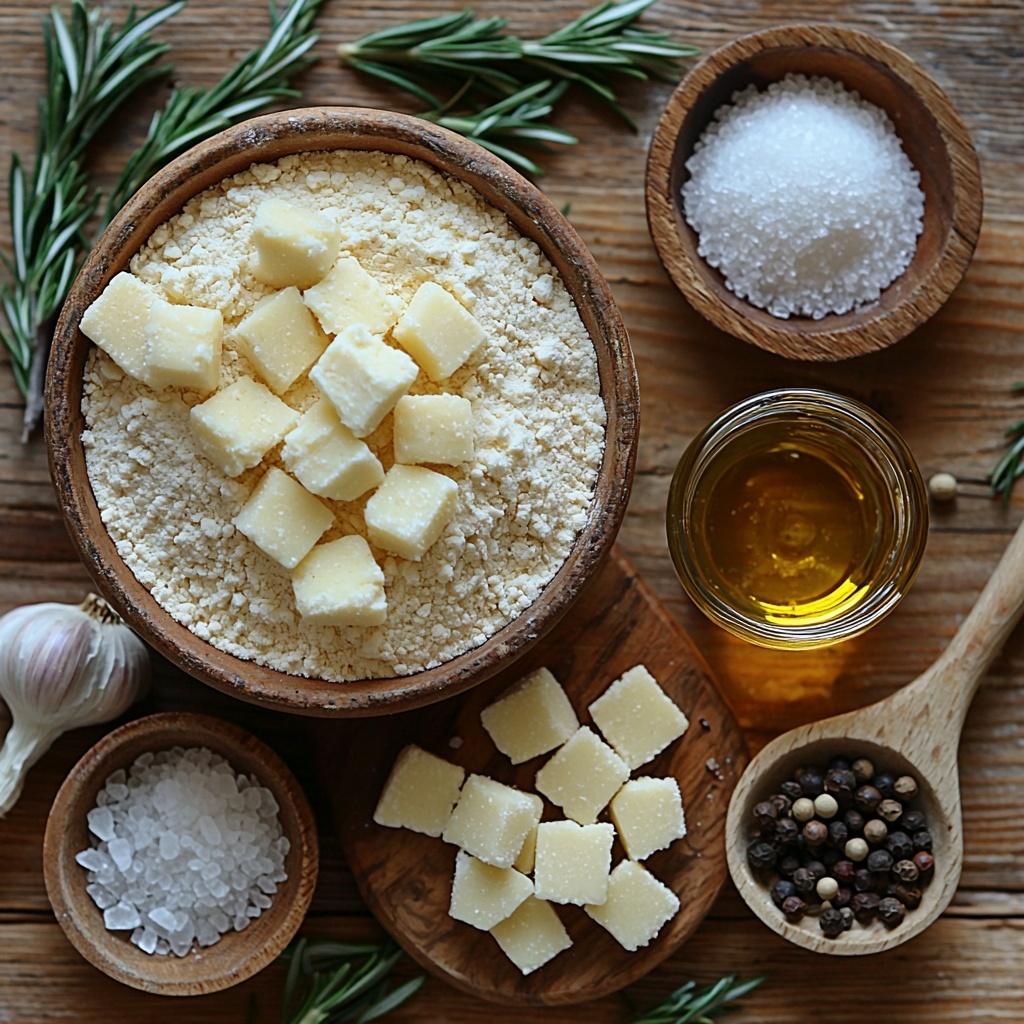
Ingredients You’ll Need
These ingredients are straightforward but each plays a vital role to achieve that perfect crust, delightful flavor, and tender crumb. From the gentle rise of yeast to the punch of fresh herbs and garlic, every component is essential.
- All-Purpose Flour (3 ½ cups/420g): The foundation for a sturdy yet soft bread texture.
- Active Dry Yeast (2 ¼ tsp): Responsible for giving the bread its beautiful rise and fluffy crumb.
- Warm Water (1 ½ cups/360ml): The perfect temperature to activate the yeast and form the dough.
- Granulated Sugar (1 tbsp): A little sweetness that feeds the yeast and balances the savory notes.
- Fine Sea Salt (2 tsp): Enhances the flavor throughout every bite without overpowering.
- Extra Virgin Olive Oil (¼ cup + extra): Adds moisture and richness while infusing a subtle fruitiness into the bread.
- Fresh Garlic (6-8 medium cloves, minced): Creates a bold, inviting aroma and a robust flavor punch.
- Fresh Rosemary (2 tbsp, finely chopped): Brings a fragrant, piney depth that complements the garlic beautifully.
- Flaky Sea Salt (½ tsp, for topping): Adds a delightful crunch and intensified burst of flavor on top.
- Freshly Ground Black Pepper (¼ tsp, optional): Offers a subtle heat that livens up the herbal notes.
How to Make Rustic Garlic Rosemary Skillet Bread Recipe
Step 1: Activate Yeast
Start by waking up your yeast in a cozy bath of warm water and sugar. Let it sit until it has foamed up like a little cloud on the surface, ensuring your bread will rise beautifully and have that airy texture we all crave.
Step 2: Mix Dough
Next, mix the flour and sea salt in a separate bowl. To the yeast mixture, add some olive oil for richness, then gradually combine the dry ingredients. You’ll notice the dough starting to come together into a rough, shaggy mass — that’s the magic beginning.
Step 3: Knead Dough
Now, knead your dough either by hand for a little workout or with a stand mixer for convenience. You’re aiming for a smooth, elastic dough that springs back when poked. This kneading process develops the gluten structure, which gives the bread its chew.
Step 4: First Rise
Coat a bowl lightly with olive oil and nestle your dough inside, turning it so the whole surface is slicked with oil. Cover and let it rest somewhere warm for about an hour to an hour and a half, during which it will double in size and become wonderfully puffy.
Step 5: Prep Skillet & Aromatics
While the dough is rising, mince your garlic and chop the rosemary finely. Add some olive oil into your 10-inch cast iron skillet, then scatter most of the garlic and rosemary into the oil along with a pinch of flaky sea salt and pepper. This flavorful base will infuse the bread with wonderful aroma and taste as it bakes.
Step 6: Shape & Second Rise
Gently punch down the risen dough and shape it into a round loaf. Place it in the prepared skillet and press it down lightly so it fits snugly. Cover again and let it rise for 30 to 45 minutes until it looks puffed and ready to bake.
Step 7: Preheat Oven & Top Bread
About 15 to 20 minutes before the end of the second rise, preheat your oven to 400°F (200°C). Once the dough has risen, create dimples across the surface using your floured fingers — this gives your bread that rustic look and allows the olive oil to seep in. Drizzle the top with more olive oil, then sprinkle the remaining garlic, rosemary, flaky sea salt, and black pepper for a stunning and flavorful finish.
Step 8: Bake
Slide the skillet into the oven and bake for 25 to 35 minutes until the crust turns a gorgeous deep golden brown. The bread is done when it sounds hollow when tapped underneath or reaches an internal temperature between 200-210°F (93-99°C).
Step 9: Cool & Serve
Carefully remove the bread from the skillet and transfer it to a wire rack to cool for at least 15 to 20 minutes. This resting time lets the texture set firm enough to slice without crumbling. Serve it warm, and get ready to savor that perfect rustic, garlicky, rosemary-infused bread.
How to Serve Rustic Garlic Rosemary Skillet Bread Recipe
Garnishes
Your freshly baked Rustic Garlic Rosemary Skillet Bread Recipe is delightful on its own, but a few simple garnishes can elevate it even more. Consider brushing on just a touch of extra virgin olive oil for shine, or sprinkling a little more flaky sea salt right before serving to enhance each bite’s texture and flavor.
Side Dishes
This bread is so versatile it pairs beautifully with a variety of dishes. Try it alongside a warm bowl of tomato basil soup, fresh caprese salad, or a hearty cheese and charcuterie board for an impressive and satisfying meal. Its robust flavors and rustic texture complement rich dips, olive oil and balsamic vinegar, or savory spreads as well.
Creative Ways to Present
For a cozy gathering, slice your Rustic Garlic Rosemary Skillet Bread Recipe and serve it in a wooden basket lined with a linen napkin for that warm, inviting feel. You can also hollow out part of the loaf to make a bread bowl for soups or stews, giving everyone a bit of fun and rustic charm at the table.
Make Ahead and Storage
Storing Leftovers
Keep any leftover bread in a paper bag or loosely wrapped in a kitchen towel at room temperature for up to two days. This will help maintain its crusty exterior while keeping the interior soft. Avoid airtight containers which can trap moisture and make the crust soggy.
Freezing
If you want to save your Rustic Garlic Rosemary Skillet Bread Recipe for longer, slice it before freezing and place slices in a freezer-safe bag. They’ll keep well for up to three months, allowing you to grab a slice whenever a craving hits.
Reheating
To bring your bread back to life, pop it in a warm oven (about 350°F / 175°C) for 5 to 10 minutes or toast individual slices for that freshly baked crunch once again. This revives both the crisp crust and tender crumb magnificently.
FAQs
Can I use dried rosemary instead of fresh?
While fresh rosemary offers the most vibrant flavor and aroma for this recipe, you can substitute with dried rosemary if needed. Use about one-third the amount of fresh, finely crushing the dried herb to release more fragrance.
Is cast iron skillet essential for this bread?
Using a cast iron skillet helps the bread develop a beautifully crisp crust due to its excellent heat retention and distribution. However, if you don’t have one, a heavy oven-safe skillet or baking dish can work as a substitute.
Can I make this bread gluten-free?
This Rustic Garlic Rosemary Skillet Bread Recipe relies on gluten development for its texture, so it’s not recommended to simply swap flour for a gluten-free blend without adjustments. Specialized gluten-free bread recipes are a better bet if you need to avoid gluten.
How do I know when the yeast is properly activated?
When you combine warm water, sugar, and yeast, the mixture should become foamy and bubbly within 5 to 10 minutes. If it doesn’t, your yeast might be old or the water temperature not quite right, so try again with fresh yeast and ensure the water is warm but not hot.
Can I add other herbs or ingredients to this bread?
Absolutely! Feel free to experiment by adding ingredients like thyme, oregano, sun-dried tomatoes, or even grated Parmesan cheese to customize the Rustic Garlic Rosemary Skillet Bread Recipe to your taste.
Final Thoughts
This Rustic Garlic Rosemary Skillet Bread Recipe is one of those special kitchen triumphs that feels both impressive and comforting at the same time. With its fragrant garlic and earthy rosemary, golden crust, and tender crumb, it’s a recipe that invites you back to the joy of homemade bread. Trust me, once you make this loaf, you’ll be reaching for it again and again to share with family and friends. So, grab your cast iron skillet and get ready to fill your home with the most welcoming, mouthwatering aroma imaginable.
Print
Rustic Garlic Rosemary Skillet Bread Recipe
- Prep Time: 50 minutes
- Cook Time: 30 minutes
- Total Time: 1 hour 20 minutes
- Yield: 1 loaf (8 servings)
- Category: Bread
- Method: Baking
- Cuisine: American
Description
This Rustic Garlic Rosemary Skillet Bread is a wonderfully aromatic and flavorful homemade bread baked in a cast iron skillet. Infused with fresh garlic and rosemary, it boasts a golden crust and a soft, tender crumb. Perfect as a savory side, appetizer, or for dipping in olive oil, this bread recipe involves a simple yeast dough with rising periods and finishes with a delightful bake in your oven.
Ingredients
Dough Ingredients
- 3 ½ cups (420g) All-Purpose Flour
- 2 ¼ tsp Active Dry Yeast (1 standard packet)
- 1 ½ cups (360ml) Warm Water (105-115°F / 40-46°C)
- 1 tbsp Granulated Sugar
- 2 tsp Fine Sea Salt
- ¼ cup Extra Virgin Olive Oil
Aromatic Topping
- 6–8 medium cloves Fresh Garlic, minced
- 2 tbsp Fresh Rosemary, finely chopped
- ½ tsp Flaky Sea Salt, for topping
- ¼ tsp Freshly Ground Black Pepper (optional)
- Extra Olive Oil for drizzling (1-2 tbsp)
Instructions
- Activate Yeast: In a large bowl, combine the warm water, granulated sugar, and active dry yeast. Let it sit for 5-10 minutes until the mixture becomes foamy, indicating the yeast is active.
- Mix Dough: In a separate bowl, whisk together the all-purpose flour and fine sea salt. Add ¼ cup of extra virgin olive oil to the yeast mixture, then gradually incorporate the dry ingredients, mixing until a shaggy dough forms.
- Knead Dough: Knead the dough by hand for 10-15 minutes or with a stand mixer for 8-10 minutes until it becomes smooth and elastic, indicating proper gluten development.
- First Rise: Lightly grease a bowl with olive oil and place the dough inside, turning to coat it evenly with oil. Cover the bowl and let the dough rise in a warm spot for 1 to 1 ½ hours, until it has doubled in size.
- Prep Skillet & Aromatics: While the dough is rising, mince the garlic and finely chop the rosemary. Pour 2 tablespoons of olive oil into a 10-inch cast iron skillet. Scatter two-thirds of the minced garlic, chopped rosemary, a pinch of flaky sea salt, and optional black pepper evenly in the skillet.
- Shape & Second Rise: Gently punch down the risen dough and shape it into a round loaf. Place the dough in the prepared skillet, pressing down lightly to fit. Cover and let the dough rise again for 30 to 45 minutes in a warm spot, until puffed.
- Preheat Oven & Top Bread: About 15-20 minutes before the end of the second rise, preheat your oven to 400°F (200°C). Once the dough has risen, use floured fingers to dimple the surface. Drizzle 1 to 2 tablespoons of olive oil over the dough. Scatter the remaining garlic, rosemary, flaky sea salt, and black pepper on top.
- Bake: Bake the bread in the preheated oven for 25-35 minutes, or until the crust is deep golden brown. The internal temperature should reach 200-210°F (93-99°C), or the loaf should sound hollow when tapped on the bottom.
- Cool & Serve: Remove the bread immediately from the skillet and transfer it to a wire rack to cool for at least 15-20 minutes. Serve warm and enjoy the rustic, herby flavor and aroma.
Notes
- Make sure the water temperature for activating yeast is between 105-115°F (40-46°C) to avoid killing the yeast.
- Using a cast iron skillet helps achieve a crispy, golden crust flavor-enhancing aroma.
- Letting the bread cool on a wire rack prevents the bottom from becoming soggy.
- You can omit black pepper if preferred or adjust garlic quantity for more subtle flavor.
- Store leftovers wrapped tightly at room temperature for up to 2 days or freeze slices for longer storage.