Description
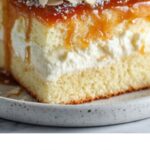
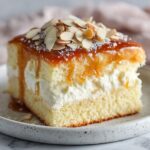
German Bee Sting Cake, also known as Bienenstich, is a classic German dessert featuring a soft yeast dough base topped with a golden, crunchy honey-almond glaze and filled with a creamy vanilla custard. This cake combines a tender, fluffy crumb with a sweet, nutty topping and a luscious custard center, creating a delightful balance of textures and flavors.
Ingredients
Scale
Dough
- 3 cups all-purpose flour, sifted
- ¼ cup granulated sugar for dough
- 1 packet active dry yeast (about 2 ¼ teaspoons)
- ¾ cup whole milk, lukewarm
- ¼ cup unsalted butter, softened
- 2 large eggs
- ¼ teaspoon salt for dough
Topping
- ¼ cup granulated sugar for topping
- 2 tablespoons honey for topping
- ½ cup sliced almonds
- 2 tablespoons unsalted butter
- Pinch of salt
Custard Filling
- 2 egg yolks
- ¼ cup granulated sugar for custard filling
- 2 cups whole milk for custard filling
- 2 tablespoons cornstarch for custard filling
- 2 teaspoons vanilla extract for custard filling
Instructions
- Activate Yeast: Start by heating your milk until it’s lukewarm. Avoid making it too hot, as you don’t want to kill the yeast. Stir in the sugar and sprinkle the yeast on top. Let this mixture rest for about 10 minutes until it turns frothy.
- Prepare Dough: In a large mixing bowl, combine the sifted flour, remaining sugar, and salt. Make a well in the center and add your softened butter, eggs, and the frothy yeast mixture. Knead this dough until it’s smooth and elastic – about 10 minutes by hand or 6 minutes using a mixer.
- First Rise: Place your dough in a lightly greased bowl, cover it with a damp towel, and let it rise in a warm spot for about an hour, or until it doubles in size.
- Make Almond Topping: Melt the butter in a saucepan over medium heat. Stir in the sugar, honey, and a pinch of salt, and let everything dissolve together. Add the sliced almonds, ensuring they’re well coated in the sweet mixture. Allow this topping to cool slightly.
- Form Cake Base and Add Topping: Once your dough has risen, give it a good punch to deflate it slightly and transfer it to a greased baking pan. Spread it evenly to form a base, and spoon the almond-honey mixture generously over the top.
- Second Rise: Allow the cake to rest for another 20 minutes to rise again slightly.
- Bake Cake: Preheat your oven to 350°F (175°C). Bake your cake for 25-30 minutes until golden brown and the almond topping is crispy. Let it cool completely after removing from the oven.
- Prepare Custard: Gently heat the milk with vanilla extract until warm. In a separate bowl, whisk egg yolks, sugar, and cornstarch until smooth.
- Cook Custard: Gradually pour the warm milk into the egg mixture, stirring constantly to prevent curdling. Return this mixture to the saucepan and cook over medium heat, stirring until thickened.
- Cool Custard: Once thickened, transfer the custard to a bowl, cover with plastic wrap touching its surface, and let it cool completely.
- Assemble Cake: Slice your cooled cake into two horizontal layers. Spread the creamy custard over the bottom layer, then place the top layer back on, almond side up.
Notes
- Make sure the milk for the yeast activation is lukewarm, not hot, to avoid killing the yeast.
- Kneading the dough well is key to developing gluten and achieving a soft texture.
- Let the cake cool completely before slicing and assembling to prevent custard from melting.
- The almond topping can be prepared ahead and refrigerated if desired; just warm before spreading over dough.
- Plastic wrap should touch the custard surface to prevent a skin from forming as it cools.
- Use fresh yeast for best rise, but active dry yeast as used here works well.