
“`html
There is something wonderfully magical about mastering the art of buttery, flaky croissants right in your own kitchen, and this Croissants Step-by-Step Recipe makes the process approachable, unforgettable, and genuinely rewarding. Each layer unfolds with tender flakiness, a golden crust gleams invitingly, and the aroma alone promises a fresh bakery experience. Whether you’re a seasoned baker or a curious beginner, following this Croissants Step-by-Step Recipe will give you a truly delicious result that’s perfect for any occasion.
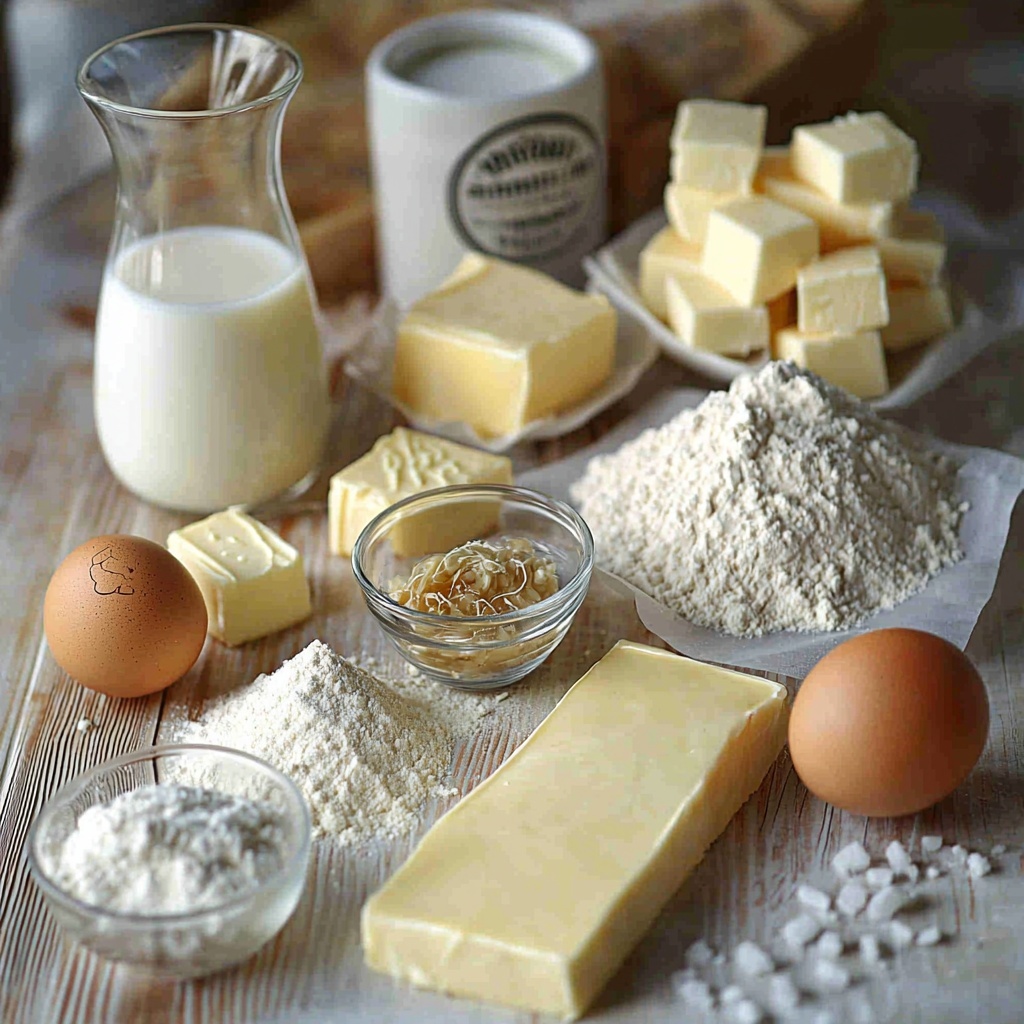
Ingredients You’ll Need
These ingredients might seem simple, but each one plays a crucial role in creating the perfect croissant texture and flavor. From the creamy richness of butter to the tender structure lent by flour and yeast, every item is essential to the final masterpiece.
- 2 1/4 teaspoons instant yeast (or active dry yeast): The driving force behind your dough’s rise and airy crumb.
- 160 g whole milk (lukewarm): Adds richness and moisture for a tender crumb.
- 120 g water: Balances the liquid content, helping with dough consistency.
- 470 g all-purpose flour (plus extra for dusting): The foundation for structure and chewiness.
- 50 g granulated sugar: Adds subtle sweetness that enhances browning.
- 1 1/2 teaspoons salt: Essential for flavor balance and yeast control.
- 30 g unsalted butter (room temperature): Incorporated into the dough for tenderness.
- 250 g unsalted butter (room temperature): Used in laminated layers for that iconic flakiness.
- 1 1/2 tablespoons all-purpose flour: Mixed with butter for the lamination to help with handling.
- 1 large egg (for egg wash): Gives the crust a shiny, golden finish.
- 1 tablespoon water (for egg wash): Lightens the egg wash and helps it spread evenly.
How to Make Croissants Step-by-Step Recipe
Step 1: Activate Yeast
Start by combining lukewarm milk, water, yeast, and sugar in a large bowl. If you are using active dry yeast, let this mixture rest for 5 to 10 minutes until it becomes frothy, signaling your yeast is awake and ready. Instant yeast skips this waiting step as it dissolves directly into the mixture, saving time without sacrificing rise.
Step 2: Make Dough
Once your yeast is activated, add the all-purpose flour and salt to the bowl and mix until a rough dough forms. This is your base, bringing your croissants together before kneading.
Step 3: Knead Dough
After the initial mix, turn the dough onto a lightly floured surface. Knead for about 3 minutes to develop the gluten network, which will give the dough strength and elasticity while making it less sticky and easier to handle.
Step 4: Incorporate Butter
Add the 30 grams of room temperature unsalted butter into the dough, kneading until the butter is fully blended. This addition enriches the dough and helps create a tender crumb that will marry perfectly with the laminated butter layers.
Step 5: Chill Dough
Shape your dough into a rough rectangle, then tightly wrap it in plastic wrap and refrigerate for at least 2 hours or overnight. This resting period relaxes the gluten and firms up the dough, preparing it for lamination.
Step 6: Prepare Butter Block
Mix the 250 grams of room temperature butter with 1 1/2 tablespoons of flour until combined. Place this mixture between two sheets of parchment paper and carefully roll it into a 20 by 15 cm rectangle about 0.5 cm thick. This butter block is the precious layer that creates your croissants’ flakiness.
Step 7: Chill Butter Block
Refrigerate the butter block until it is firm but still pliable. This balance ensures it can be easily encased by the dough without melting or breaking.
Step 8: Laminate Dough
Roll your chilled dough on a floured surface to a 20 by 32 cm rectangle, twice the height of the butter block. Place the butter block in the center, folding the dough’s edges over it so it’s completely enclosed. Seal tightly and cut shallow slits along the edges to prevent tearing as you roll.
Step 9: First Fold
Rotate the dough 90 degrees so the seam faces vertically. Roll gently into a long rectangle about 6 mm thick. Trim edges for neatness, then fold the top third down and the bottom third up, like folding a letter. Wrap in plastic and chill for 30 to 60 minutes.
Step 10: Second Fold
Repeat the rolling and folding process, trimming edges to keep everything tidy. Fold into thirds again, turn as before, wrap, and chill another 30 to 60 minutes.
Step 11: Third Fold
Roll and fold one last time, then refrigerate the dough for at least 2 hours. This resting step is critical for relaxing the gluten and solidifying the layered butter, contributing to that exquisite flaky texture.
Step 12: Shape Croissants
Roll the dough into a larger rectangle approximately 60 by 30 cm and 5 mm thick. Mark intervals along the edges and cut diagonal lines to form roughly 12 triangles. Stretch the base of each triangle gently, roll toward the tip, tuck the tip under, and curve the ends to form classic crescent shapes.
Step 13: Proof Croissants
Place your shaped croissants on parchment-lined trays, cover loosely, and let them proof at room temperature for 2 to 5 hours. They should double in size and jiggle gently when the tray is shaken—this is the hallmark of a perfectly proofed croissant ready for baking.
Step 14: Preheat Oven
As your croissants complete proofing, preheat your oven to 200°C (400°F). Ensuring the oven is fully heated will help the croissants develop that beautiful crust as they bake.
Step 15: Egg Wash
Whisk together one large egg and one tablespoon of water to create a smooth egg wash. Gently brush this onto the croissants before baking to achieve a shiny, golden-brown finish that is as eye-catching as it is tasty.
Step 16: Bake Croissants
Bake in the preheated oven for 20 to 22 minutes until deeply browned and crisp. Once baked, let them cool to room temperature before slicing to fully appreciate the flaky layers and tender crumb inside.
How to Serve Croissants Step-by-Step Recipe
Garnishes
Serving croissants with a touch of simple garnishes can elevate your experience. A dab of high-quality jam, a smear of fresh butter, or even a sprinkle of powdered sugar can add a lovely finishing touch that complements the croissant’s buttery layers perfectly.
Side Dishes
Enjoy croissants with fresh fruit, creamy yogurt, or a sharp cheese plate for breakfast or brunch. For a savory twist, pair them with smoked salmon, sliced avocado, or scrambled eggs to turn them into a filling meal.
Creative Ways to Present
If you want to impress guests, turn croissants into mini sandwiches with ham, cheese, and mustard or serve them alongside a warm bowl of soup on a crisp day. The versatility of this Croissants Step-by-Step Recipe allows you to get creative with presentation and pairing while keeping the croissants star of the show.
Make Ahead and Storage
Storing Leftovers
If you have leftovers, store croissants in an airtight container at room temperature and enjoy them within 3 to 4 days. This keeps the delicate flakiness intact without drying them out.
Freezing
Croissants freeze wonderfully. Wrap them individually in plastic wrap and place them in a freezer-safe bag for up to one month. When you want to enjoy them, simply thaw at room temperature before reheating to refresh their texture.
Reheating
To revive your croissants’ fresh-from-the-oven texture, warm them in a preheated oven at 175°C (350°F) for about 5 to 7 minutes. This step crisps up the outer layers beautifully while warming the inside just right.
FAQs
Can I use active dry yeast instead of instant yeast?
Absolutely! Just be sure to activate active dry yeast in the warm milk and water mixture with sugar first, letting it sit until frothy. Instant yeast can be added directly without this step, but both will work well in this recipe.
Why is chilling the dough so important?
Chilling relaxes the gluten and firms the butter layers, which is crucial for the lamination process. It helps create those distinct, flaky layers croissants are famous for.
How long should I proof the croissants?
Proofing time can vary based on room temperature but generally takes between 2 to 5 hours until the croissants double in size and jiggle gently when the tray is shaken.
Can I make croissants without laminating the butter?
While you can skip lamination, the signature flaky layers and buttery crispness come specifically from folding cold butter into the dough multiple times. Skipping this step results in a different texture altogether.
Is it okay to freeze unbaked croissants?
Yes! You can freeze shaped, unbaked croissants by placing them on a tray to freeze individually, then storing them in a freezer-safe bag. When ready, thaw and let them proof before baking.
Final Thoughts
This Croissants Step-by-Step Recipe is more than just a guide; it’s an invitation into the joyful, rewarding world of home baking. With a little patience and love, you’ll be rewarded with croissants that rival those from your favorite bakery. So roll up your sleeves, get your butter ready, and dive into this delicious adventure—your kitchen is about to smell amazing!
“`
Print
Croissants Step-by-Step Recipe
- Prep Time: 30 minutes
- Cook Time: 22 minutes
- Total Time: 4 hours 40 minutes
- Yield: 12 servings
- Category: Baking
- Method: Baking
- Cuisine: French
Description
This step-by-step croissant recipe guides you through the traditional French technique of making buttery, flaky croissants at home. Starting with yeast activation, dough preparation, butter incorporation, and a detailed lamination process, you’ll learn how to create delicate layers that puff beautifully in the oven. With resting and chilling periods to perfect texture and flavor, these croissants are ideal for breakfast or a special treat.
Ingredients
Dough Ingredients
- 2 1/4 teaspoons instant yeast (or active dry yeast)
- 160 g whole milk (lukewarm)
- 120 g water
- 470 g all-purpose flour (plus extra for dusting)
- 50 g granulated sugar
- 1 1/2 teaspoons salt
- 30 g unsalted butter (room temperature)
Butter Block
- 250 g unsalted butter (room temperature)
- 1 1/2 tablespoons all-purpose flour
Egg Wash
- 1 large egg
- 1 tablespoon water
Instructions
- Activate Yeast: In a large bowl, combine lukewarm milk, water, yeast, and sugar. If you are using active dry yeast, allow the mixture to sit for 5-10 minutes until frothy to activate it. If using instant yeast, this step can be skipped as it dissolves directly into the liquid.
- Make Dough: Add all-purpose flour and salt to the yeast mixture, stirring until a rough dough forms.
- Knead Dough: Turn the dough onto a lightly floured surface and knead for about 3 minutes. This develops the gluten and results in a smoother, less sticky dough.
- Incorporate Butter: Add 30 g of room temperature unsalted butter to the dough and knead a few more minutes until fully incorporated.
- Chill Dough: Shape the dough into a rough rectangle, wrap it in plastic wrap, and refrigerate for at least 2 hours or overnight to rest and firm up.
- Prepare Butter Block: Mix 250 g of room temperature unsalted butter with 1 1/2 tablespoons of flour until combined. Place between two sheets of parchment paper and roll into a 20×15 cm (8×6 inch) rectangle about 0.5 cm (1/4 inch) thick, using the folding parchment technique to create clean edges.
- Chill Butter Block: Refrigerate the butter block until it is firm but pliable.
- Laminate Dough: Roll out the chilled dough on a floured surface to a 20×32 cm (8×12.5 inch) rectangle, twice the height of the butter block and similar in width. Place the butter block centered on the dough then fold the dough edges over to fully encase the butter. Seal the edges and make shallow slits along the edges to prevent tearing during rolling.
- First Fold: Rotate the dough 90 degrees so the seam is vertical. Roll gently into a long rectangle about 6 mm thick, focusing on length. Trim uneven edges, then fold the top third down and the bottom third up like a letter. Wrap in plastic and refrigerate for 30 to 60 minutes.
- Second Fold: Repeat the rolling and folding process: roll out, trim edges for neatness, fold into thirds, turn, wrap in plastic, and refrigerate for another 30-60 minutes.
- Third Fold: Repeat the rolling and folding once more, then refrigerate the dough for at least 2 hours to allow the gluten to relax and butter layers to chill properly.
- Shape Croissants: Roll the dough into a 60×30 cm (24×12 inch) rectangle about 5 mm (1/4 inch) thick. Mark 5 cm (2 inch) intervals along the top and bottom edges and cut diagonal lines to form approximately 12 triangles. Gently stretch each triangle at the base, roll from the wide end to the tip, tuck the tip under to secure, and curve the ends into classic crescent shapes.
- Proof Croissants: Place the shaped croissants on parchment-lined baking trays, cover loosely with plastic wrap or a towel, and proof at room temperature for 2-5 hours until doubled in size and puffy. You can check readiness by gently shaking the tray; the croissants should jiggle.
- Preheat Oven: Preheat your oven to 200°C (400°F) to prepare for baking the croissants.
- Egg Wash: Whisk together one large egg with one tablespoon of water. Using a pastry brush, gently coat the tops of the croissants with the egg wash to achieve a shiny, golden crust.
- Bake Croissants: Bake croissants in the preheated oven for 20-22 minutes until they are deeply browned and crisp. Allow to cool to room temperature before slicing to enjoy the best flaky layers.
Notes
- Use cold butter and chill dough well between folds to create distinct flaky layers.
- Ensure all butter and dough work is done quickly to prevent butter from melting into the dough.
- Proof croissants until they are visibly puffy and jiggle when the pan is gently shaken, which indicates proper fermentation.
- Egg wash adds a beautiful golden shine but can be omitted for a lighter crust.
- Store leftover croissants at room temperature in an airtight container and reheat gently to restore flakiness.